When planning a renovation, the first question is often not just how much it costs, but how long apartment renovation takes before you can move back in or reopen a business space. The answer depends on the apartment's size, the starting condition of the walls, and whether you are doing a cosmetic refresh or a full renovation down to the structure. We hear this question almost every week during our free on-site visits, where clients often compare it directly against the renovation pricing to see whether the timeline and the budget fit their plans.
This guide focuses specifically on the time side of renovation planning, not the cost side. For the financial side of planning, see our renovation budget planning guide, which covers pricing and expense breakdowns by category in detail. If you want the full step-by-step process, our complete apartment renovation guide covers every phase from planning to final handover.
How long does a full apartment renovation take in Albania?
In general terms, a full renovation in Albania takes anywhere from 3 to 10 weeks of work, depending mainly on the surface area and the level of intervention. A 2+1 apartment with standard work usually finishes within 3 to 6 weeks, while a 3+1 apartment or larger undergoing a full renovation needs 6 to 10 weeks, including the mandatory drying time between phases.
What determines how long a renovation takes
Before looking at concrete figures by size, it helps to understand the factors that stretch or shrink the timeline of any project:
- Total floor area - more square meters means more working days for every phase
- Starting condition of walls and ceilings - older walls with damp issues or cracks need extra preparation work
- Number of parallel trades - electrical and plumbing installations must finish before gypsum panels close the walls
- Drying time - plaster and paint need hours to days of drying between layers, and this cannot be rushed without risk
- Material availability - delays in delivery of Knauf or Rigips panels push back the start of the following phases
- Whether the apartment is occupied - moving furniture and pausing for suitable working hours stretches the schedule compared to an empty apartment
Renovation timeline by apartment size
The figures below are based on our experience from over 100 completed projects in Tirana and Durrës. They are realistic ranges for standard to mid-range quality work; projects with complex designs or premium materials can take somewhat longer.
Studio and one-bedroom apartment: cosmetic refresh
For a studio or one-bedroom apartment that only needs fresh paint and perhaps a small gypsum ceiling repair, the typical timeframe is 3 to 7 working days. This includes wall preparation, one or two coats of paint, and the drying time between them. If a decorative gypsum panel or a partial ceiling repair is added, the schedule extends by 1 to 2 extra days.
2+1 apartment: full renovation
A 2+1 apartment undergoing a full renovation (installations, gypsum, plastering, painting) usually finishes within 3 to 6 weeks. The first week focuses on electrical and plumbing installations and the new gypsum structure; the second and third weeks cover closing ceilings and partitions, full plastering of surfaces, and drying time between layers; the final weeks are dedicated to painting, tiling and finishing details.
 The plastering phase in a 2+1 renovation: surfaces are smoothed before painting can start
3+1 apartment or larger: full gut renovation
When a renovation involves changing the layout, removing interior walls, and completely rebuilding the installations, a 3+1 apartment or larger typically needs 6 to 10 weeks. Our own phase of work (gypsum, plastering, painting) takes up roughly half of that time, while the rest goes toward demolition, installations, and other trades such as tiling and flooring. Good coordination between the different crews is what determines whether the schedule holds or slips.
Villa and commercial spaces
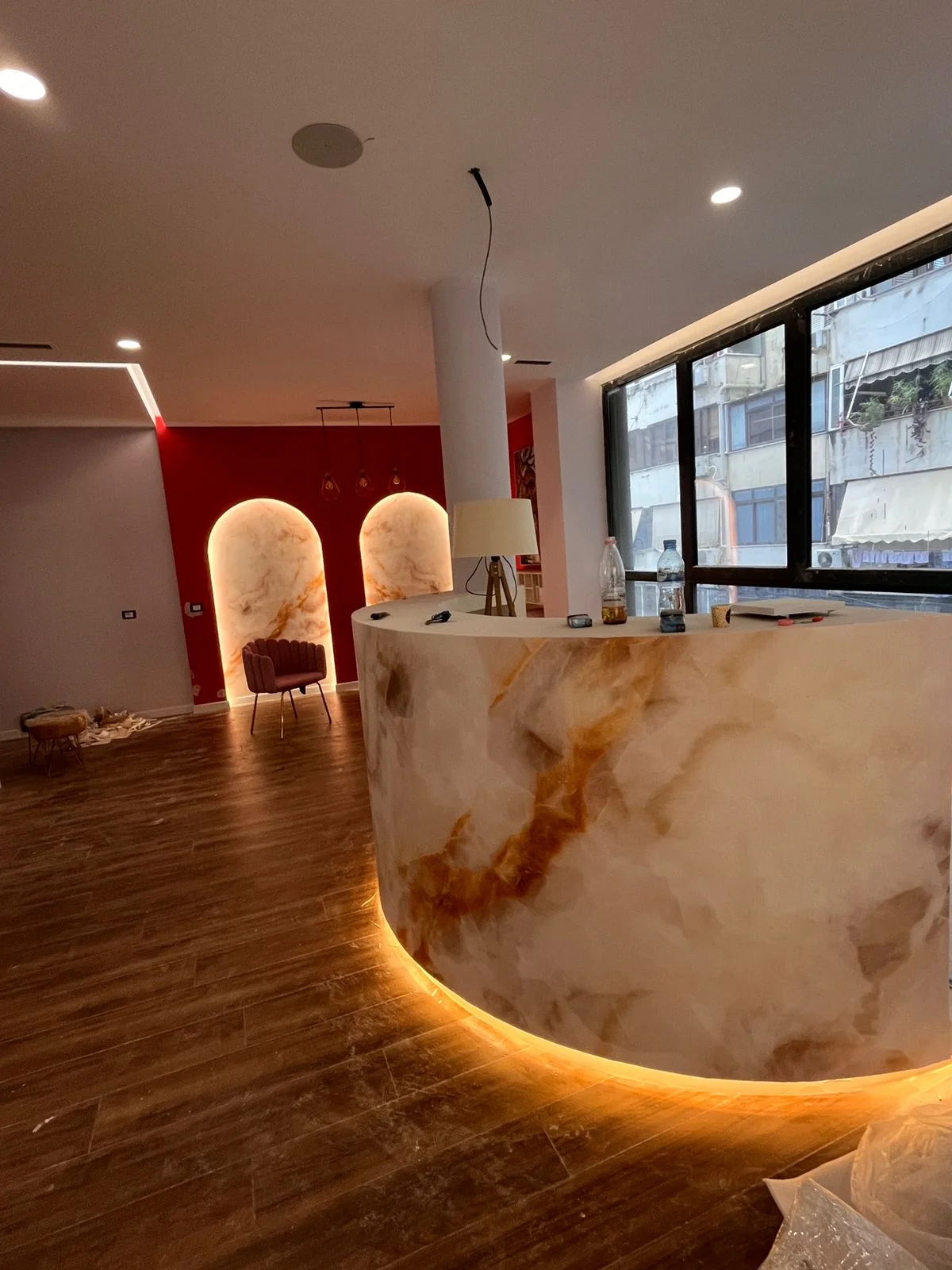
Villa-scale projects or commercial spaces (shops, offices, restaurants) usually take several months, depending on total floor area and the number of levels. For businesses that cannot pause operations, our team works flexible hours, including evenings and weekends, to minimize disruption and meet the opening deadline.
Cosmetic refresh or full renovation: how the schedule differs
The difference between a cosmetic refresh and a full renovation is not only a matter of scale, but also of sequence. A refresh usually involves one or two trades (for example just painting, or painting plus a small gypsum ceiling) carried out by a single crew within a few days. A full renovation involves several crews working in a mandatory sequence (installers, gypsum crew, plasterers, painters), where each one must wait for the previous phase to finish.
If the deadline is critical, a second crew can be added to speed up some phases in parallel, but this raises the total project cost and requires more careful on-site coordination to avoid crews getting in each other's way. For most residential projects, a single well-organized crew is the most efficient solution for both time and budget.
How long each phase takes: gypsum, plastering and painting
Each of our three main trades has its own required time, and understanding them helps you plan a realistic overall schedule:
- Gypsum works: installing a suspended ceiling or partition takes 2 to 7 days per room, depending on the number of levels, integrated LED lighting, and shapes (straight or curved). Joint compound needs about 24 hours of drying before plastering can continue.
- Plastering: applied in 1 to 2 layers, each requiring 24 to 48 hours of drying before the next layer or before painting. Room humidity and ventilation directly affect this interval.
- Painting: usually two coats, with 2 to 4 hours of waiting between them. This is the last phase in the sequence and starts only once plastering has fully dried.
This mandatory sequence (gypsum, then plastering, then painting) is part of what the construction field calls scheduling: the logical ordering of trades to avoid reopening finished surfaces. According to Wikipedia, renovation involves improving an existing building without changing its basic structure, which makes the sequencing of trades even more important than in new construction. For a full breakdown of the correct order of phases, see our dedicated guide on interior construction phases: gypsum, plastering, painting.
What causes the most common renovation delays
Even with the best planning, a few factors stretch the original schedule. These are the causes we run into most often:
- Hidden problems after demolition - damp, outdated wiring, or structural wall issues that only surface once work begins
- Delays in material delivery - shortages of panels, profiles, or paint in the chosen color
- Mid-project decision changes - adding or changing a design after a phase has already started
- Weather conditions - high humidity in autumn and winter months extends drying time for plaster and paint
- Lack of coordination between crews - when the electrician and the gypsum crew are not working to the same schedule, one waits on the other unnecessarily
- Additional approvals - structural changes such as removing load-bearing walls need engineering sign-off before work can continue
Most of these delays are avoided with an experienced contractor who plans the sequence from the start. If you are still at the stage of choosing a team, our guide on how to choose the right contractor explains exactly what questions to ask to avoid these problems.
How to speed up the timeline without hurting quality
A few practical steps help keep the schedule under control without sacrificing the final result:
- Ask for a free on-site assessment before setting a start date. We measure the space and give you a realistic schedule based on the actual condition of the walls, not assumptions.
- Finalize the design before work starts. Mid-process changes are the number one cause of delays.
- Order materials in advance when possible, so the start of a phase does not depend on a delivery.
- Consider a second crew only if the deadline is truly critical, accepting that it raises the total project cost.
- Plan the work schedule around your routine; we also work evenings and weekends for clients and businesses that cannot pause activity during the day.
With experience from over 100 residential and commercial projects in Tirana and Durrës, the Torra Gips team gives you an accurate schedule from the first free visit, not a rough guess.
Related reading
- Renovation budget planning guide for the financial side of the project
- Complete apartment renovation guide for the step-by-step process
- How to choose the right contractor to avoid common delays
If you want a concrete schedule for your specific project, not just general ranges, contact us for a free on-site visit. Reach out today or message us directly on WhatsApp at +355 68 858 0058, and we will give you an accurate timeline along with a detailed quote.