Cracks in walls and ceilings are one of the most common concerns homeowners in Tirana and Durrës bring to us, especially after seasonal swings in temperature and humidity. The vast majority are purely surface level and get fixed successfully through professional wall plastering, without major intervention or high cost. This guide explains how to tell a cosmetic crack apart from a sign of something more serious, and exactly how each type gets repaired.
What follows covers surface cracks only, the kind that affect plaster, filler or the joints between panels in gypsum works. Whenever there is genuine doubt that a crack could be structural, our recommendation stays the same: contact a licensed structural engineer before starting any cosmetic repair, because covering an underlying problem with joint compound does not fix it, it just hides it temporarily.
Why do cracks appear in walls and ceilings?
Small cracks show up in almost every building, even well built ones, and usually have entirely normal causes. Slight material shrinkage during the first years after construction, temperature and humidity swings between seasons, and small natural movements of the building itself create tension in the plaster or filler layer, which releases through a thin crack.
In buildings finished with gypsum panels, the most common cause is slight movement between two neighboring panels at the joint line, which over time cracks the filler layer if reinforcement tape was not applied correctly from the start. This is why the quality of the initial gypsum works installation directly affects how soon cracks will appear in the years that follow.
Is a wall crack structural or just cosmetic?
Most cracks in a home are cosmetic: thin, surface level and unrelated to the building's stability. They become a concern when wider than 3 to 5 millimeters, when they keep widening week after week, or when doors and windows nearby suddenly stop closing properly. In those cases, call a structural engineer first, not a plastering crew.
Warning signs that call for a structural engineer
A few concrete signs mean a crack should be assessed by a structural engineering specialist before you think about a cosmetic fix:
- The width exceeds 3 to 5 millimeters or keeps increasing over the weeks
- The crack runs diagonally through a load-bearing wall, not just the surface layer
- Doors or windows near the crack start sticking or closing poorly out of nowhere
- The crack appeared right after a noticeable seismic tremor, or keeps returning at the same spot after repair
- Similar cracks appear on several consecutive floors of the same building
Torra Gips is a plastering, gypsum and painting specialist, not a structural engineering firm. When we notice any of the signs above during an on-site assessment, we say so openly and advise the client to consult a licensed engineer first, before we take on any cosmetic work on that surface.
Types of cosmetic cracks and how to tell them apart
Once you have ruled out structural warning signs, most household cracks fall into three main categories, each with its own repair method.
Hairline cracks under 1 to 2 millimeters
This is the most common form, usually appearing as thin lines in ceiling corners, above doors or across the middle of a long wall. They come from normal material shrinkage and need nothing more than filler and a matching repaint. In nearly every case the repair takes less than an hour of work and does not return if applied correctly.
Cracks along gypsum board joints
When a crack follows the exact line of a joint between two panels, the usual cause is slight movement in the panel or reinforcement tape that was missing or damaged. The fix requires removing the cracked filler, applying a new strip of fiberglass reinforcement mesh tape over the joint, and two to three thin coats of joint compound on top, each one fully dry before the next.
Cracks at wall corners and around molding
Corners and the edges of gypsum molding sit under constant mechanical stress, so they crack more often than flat surfaces. A durable repair uses a new corner bead, or re-secures the existing one, covered with several thin, well sanded coats of filler before moving on to final plastering of the surface.
How cosmetic cracks are repaired, step by step
Regardless of the type, the repair process follows the same basic logic:
- Clean the crack. Loose material is removed with a scraper or stiff brush, and the crack is gently widened with a sharp tool to create a good bonding surface for new filler.
- Apply reinforcement tape. For cracks over 1 to 2 millimeters or those along gypsum joints, a self adhesive fiberglass mesh tape goes on before the filler, preventing the crack from reopening in the same spot.
- Fill with joint compound or filler. Finishing compound is applied in thin coats, not one thick layer, since thick layers crack on their own while drying.
- Let it dry, about 24 hours per coat. Timing depends on thickness and ambient humidity, and each new coat should only go on once the previous one is fully dry.
- Sand smooth. The surface is sanded with fine sandpaper until it is level with the surrounding wall, with no visible dips or ridges.
- Prime before painting. The repaired area gets a sealing primer before the final coat of paint, because filler and old paint absorb light differently than the rest of the wall, and skipping primer leaves a visible patch even after painting.
This process stays the same regardless of how large the repaired area is, only the time and number of coats needed change.
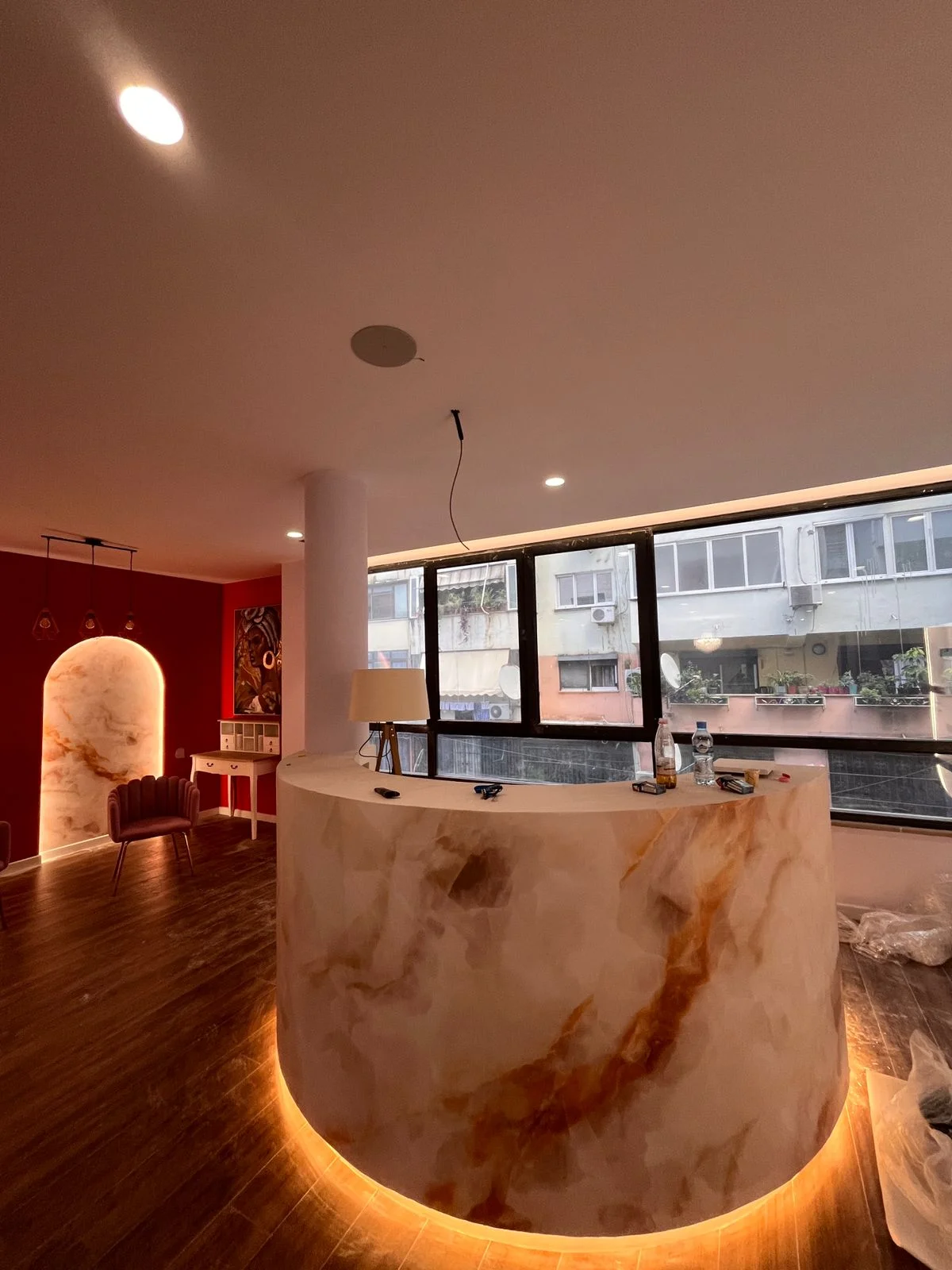 The quality of finish we aim for on every crack repair
How much does crack repair cost?
Small spot repairs on one or two isolated cracks are usually quoted as a minimum callout fee or by the linear meter of crack, not by the full square meter of wall, since the labor time depends on the number and length of cracks rather than the total surface area. This is the standard approach for small jobs that take less than a day.
When cracks are numerous, or the whole wall needs full resurfacing to even out the surface, the project moves into standard plastering pricing, 800 to 2000 Lek per square meter, depending on the starting condition of the wall and the number of coats required. For an accurate estimate on your specific case, our plastering pricing is the reference range we work from, and the final quote is always confirmed after a free on-site visit.
Cracks after the November 2019 earthquake, what to know
The earthquake of November 26, 2019 left many families in Albania with an understandable sensitivity to any new crack in their home, and that concern is entirely reasonable. It is important, however, to make the distinction: a crack that appears years after the earthquake, with no direct time link to any tremor, and without any of the warning signs described above, is very likely cosmetic.
If your building was inspected and certified safe after the earthquake, and the new cracks are not tied to any seismic event or noticeable movement, cosmetic repair is the right approach. If you have doubts about any damage that was never assessed after the earthquake, or you live in an older building without clear structural certification since 2019, our honest recommendation stays the same: consult a licensed structural engineer first, before any cosmetic repair.
How to prevent new cracks
A few simple practices noticeably reduce how often new cracks appear in a renovated home:
- Keep indoor humidity relatively stable, especially in homes with central heating that dries the air in winter, since large humidity swings shrink and expand surface materials.
- Make sure reinforcement tape is applied correctly at every gypsum joint from the gypsum works stage itself, not only during later repairs.
- Allow full drying time between phases, as we explain in interior construction phases: plastering over a surface that has not fully dried is one of the most common causes of cracks within the first year.
- Use quality materials and an experienced crew from the initial installation, since the cost of ongoing repairs often outweighs the price difference of a better first job.
Why Torra Gips for crack repair
Since founding in 2020, our team has completed over 100 projects in Tirana and Durrës, from private apartments to commercial work, and has handled every type of cosmetic crack that can appear in plaster, filler or gypsum joints. We are not structural engineers and do not claim to assess a building's stability, but we are honest when a crack looks suspicious, and we always recommend specialized consultation before starting any work.
For every repair, we offer a free on-site assessment, where we look at the width and pattern of the cracks, give you an honest diagnosis (cosmetic or not) and a transparent price quote, with no pressure and no hidden costs.
Read also
- Interior construction phases: the correct order to understand exact drying times between phases
- Renovation budget planning guide if crack repair is part of a wider renovation
- Facade painting guide if the cracks are on the exterior facade, not inside the home
If you have a crack that is worrying you and want an honest professional opinion, message us on WhatsApp at +355 68 858 0058 or contact us today for a free on-site assessment. We will tell you clearly whether it is a simple cosmetic repair or whether you need a structural engineer first.